
On a Monday morning, the LSST Camera was loaded onto a trailer at SLAC. On Tuesday, it was driven to the airport and flown overnight to Chile. On Wednesday, it was trucked for 10 hours to the bottom of the mountain where the observatory is. And on Thursday May 16th, 2024, the LSST Camera finally arrived home to the Rubin Observatory on Cerro Pachón.

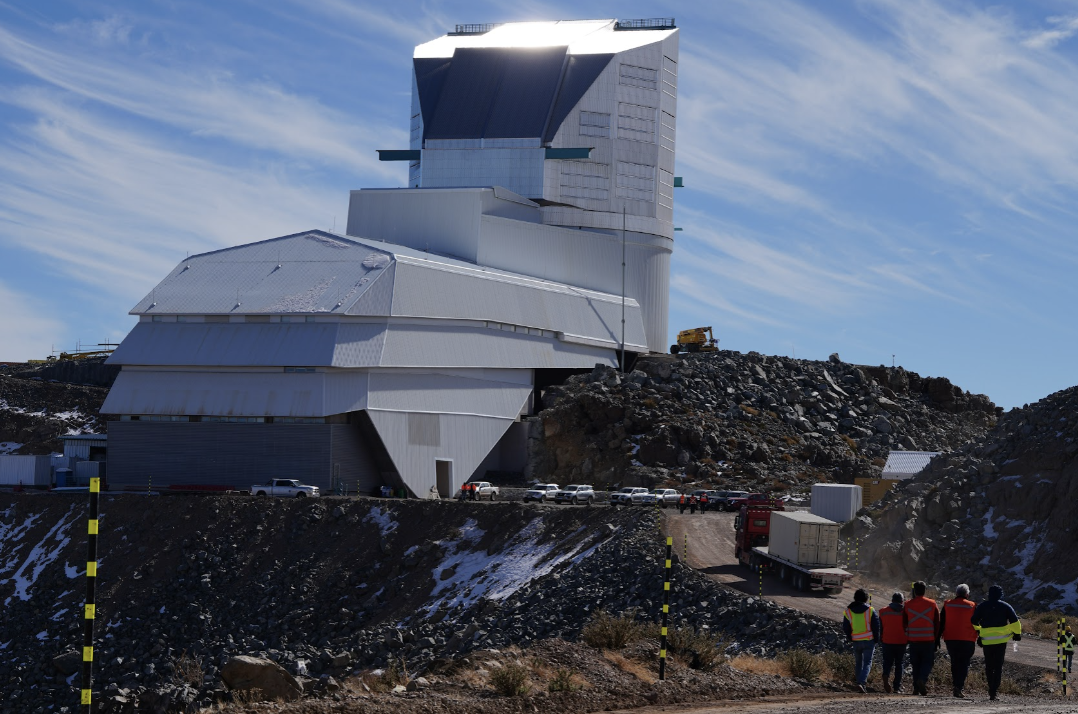
I rode the normal bus up to the observatory early Thursday morning to prep for receiving the three containers, while two of my colleagues accompanied the trucks coming up the mountain in pilot and tail vehicles to make sure they adhered to our extremely slow speed limit. Meanwhile, six additional trucks made their way north from Santiago, and luckily the trucker strike was over by Thursday afternoon so we didn’t run into any trouble there.
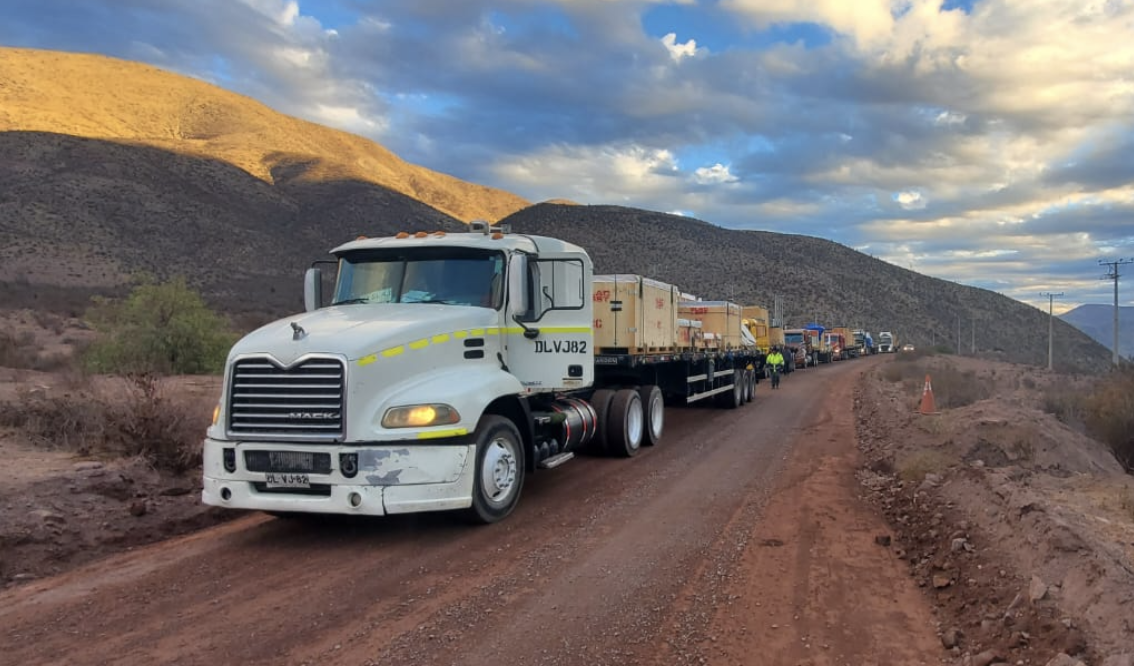
The morning was calm until I got a garbled radio call around 10am and the only things I could really understand were “stuck” and “no traction”. We decided to send a pickup truck of engineers down the hill to investigate, armed with all sorts of tools and extra coolant and such because we didn’t really know what was wrong. We also sent down a spare tractor (i.e. the front part of a big truck that pulls the trailer behind it), and it’s a good thing we did because it turns out that the tractor pulling the camera container lost traction on a specific steep part of the road and couldn’t make it past that section, and ultimately had to get switched out for the spare tractor. Out of nine trucks, the one with the camera was of course the only truck that had a single axle drive instead of double and didn’t have enough traction to get up the steeper parts of the dirt road. What are the chances?! (100%, turns out.)
Once we got to the observatory, it was smooth sailing to unload the container from the truck and then unload the camera from the container.
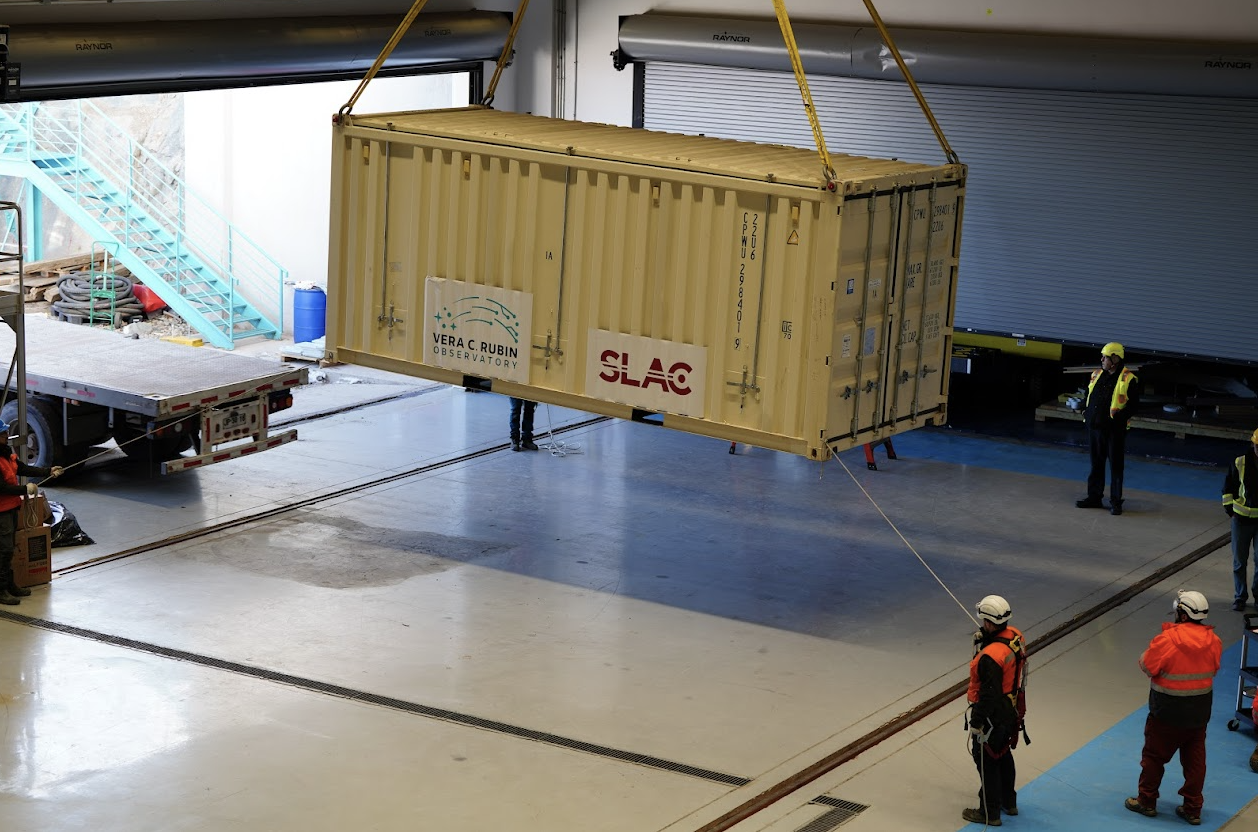
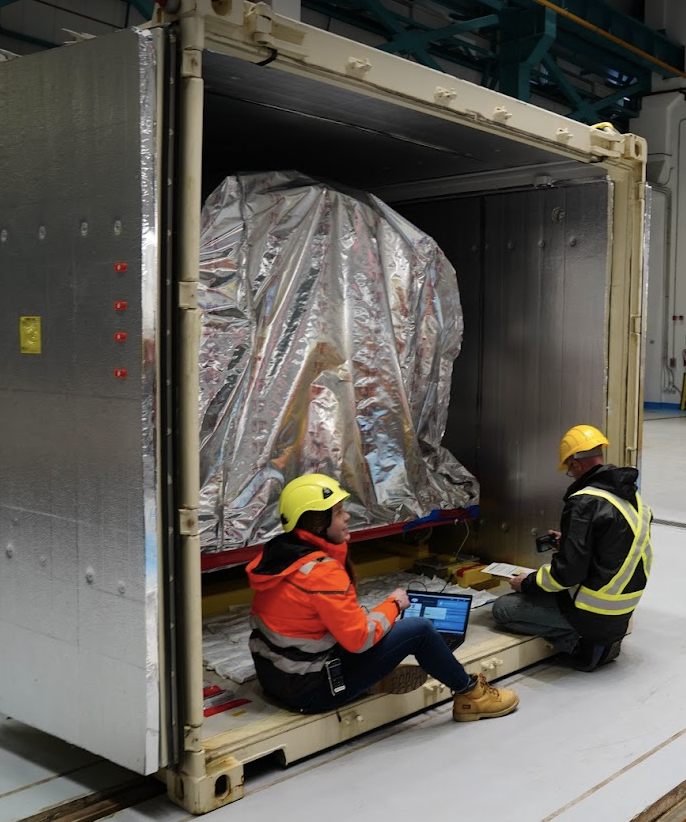


Then over the next two days, we lifted the camera off of the shipping structure and finally rolled the camera into the clean room.

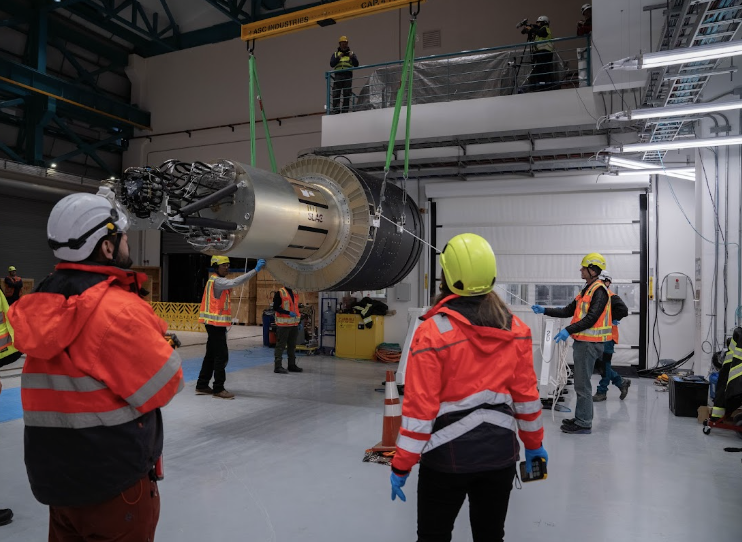
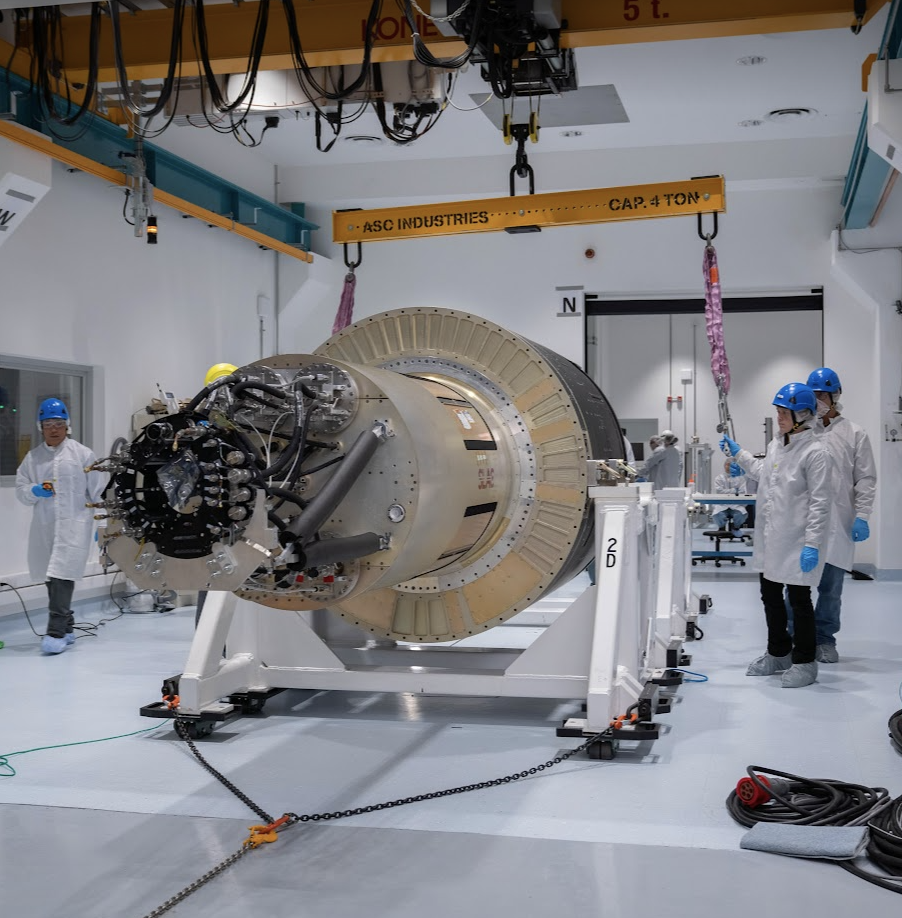

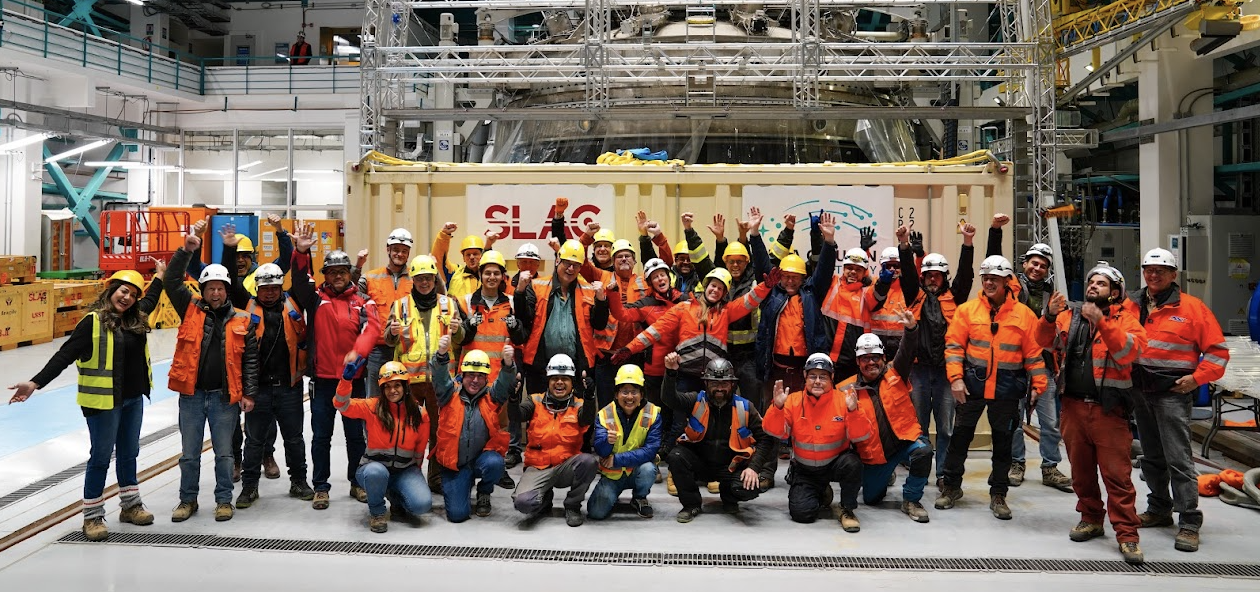
Unpacking the camera itself really felt like working in a fish bowl. We had two different documentary teams there in addition to a professional photographer, plus all of the project people that wanted to be around to witness the big moment. We’d lifted the camera many times before without problems, but having so many extra pairs of eyes on us and running the procedure both in Spanish and English with a mix of technicians really ups the stress levels. The group actually doing the work (first photo) was quite a bit smaller than the number of people present (second and third photos).


The overall unloading and unpacking sequence itself was pretty wild. Everyone including myself was hyper-focused on the camera itself, as well as the two containers accompanying it, but there were six additional trucks of support hardware that also had to get unloaded and organized at the observatory. Following the first day when three containers were delivered to the summit, we unloaded three additional trucks per day for the next two days, sorting all of the crates into storage locations based on whether that hardware would be needed in the next month or in the next year or maybe never. I promise the color-coding of the crates made a difference.
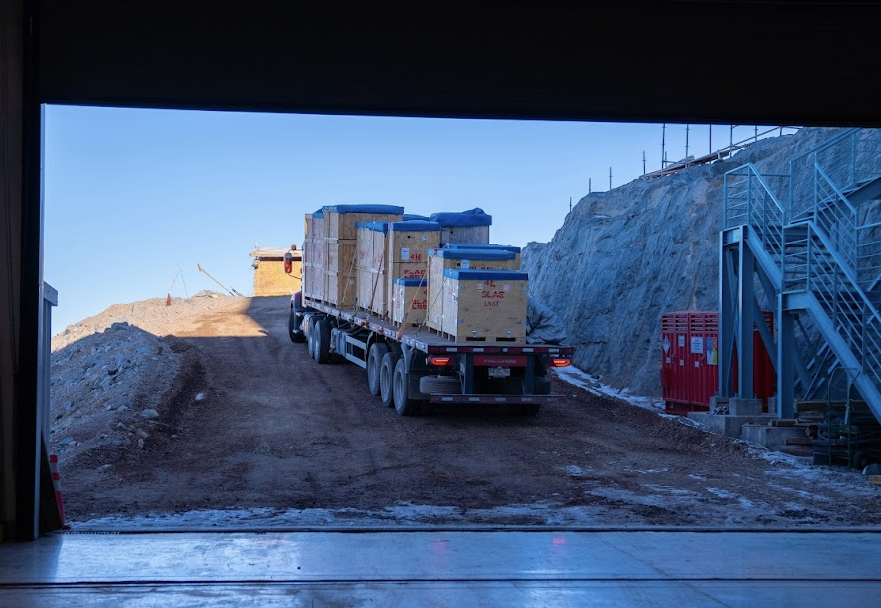
Why send something to Chile we think we’ll never use? Because we don’t know what’s going to go wrong. No part of the operations plan involves breaking a sensor, but if that ever happens and we need to replace it, we have the equipment already available onsite that we can set up to do that work.
Four months post-delivery, the camera is still there in the white room right where we left it. The reverification process is a long one, made longer by the fact that we have very few camera-dedicated people living in Chile. The work tends to get done in spurts as people like me are able to travel down to Chile for a few weeks at a time. Not a particularly efficient process, but working on a mountaintop rarely is. Getting the refrigeration system running so we can turn on the sensors is the longest process, and we were finally able to turn on the camera at the observatory the first week of September.
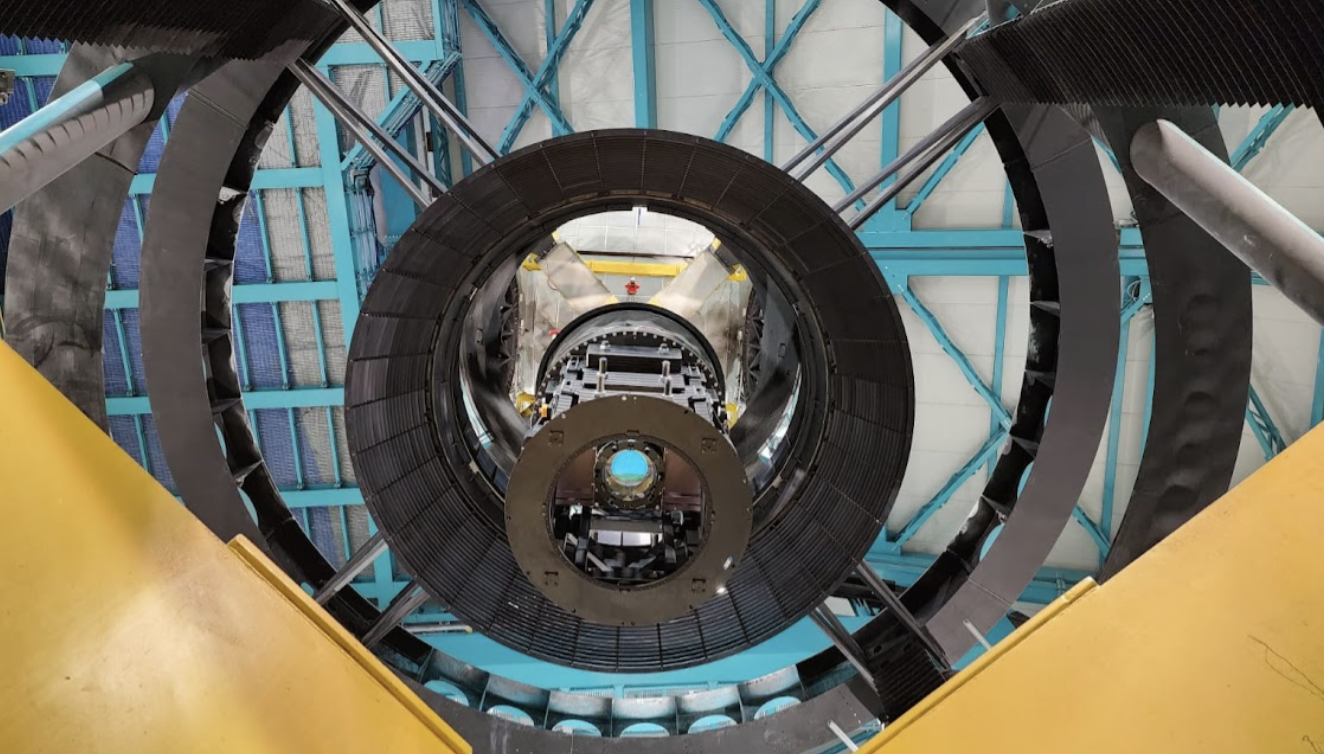
The test camera is currently on the telescope for final testing (see photo below), and the main camera won’t be installed until late this year or early next year. From there, we have a couple months of commissioning before we move into operations. It’s a long process, but it’s worth it to revolutionize the world of astronomy.

 Margaux Rhymes with Fargo
1 Pingback